Valves
Altitude Control Valves


Description
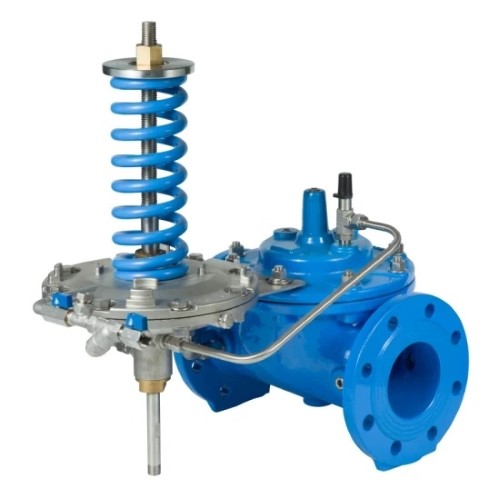
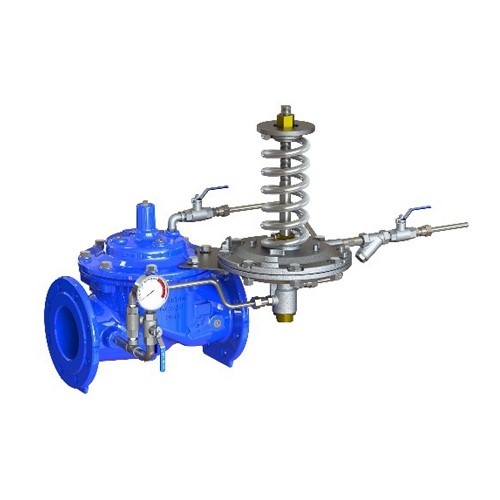
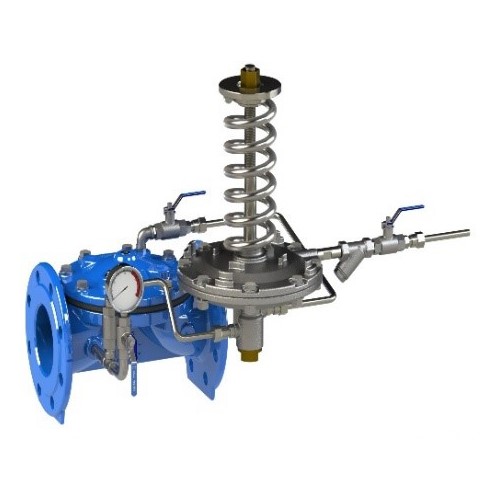
Altitude pilot control valves are essential for managing water levels in various applications, such as reservoirs, ground storage tanks, towers and water systems. These valves automatically adjust to maintain a constant level of water, ensuring efficient and reliable water control.
Altitude control valves operate based on preset parameters, typically the desired water level or pressure. The valve opens when the water level exceeds the set threshold, allowing excess water to escape. Conversely, when the level drops below the desired set point, the valve closes to prevent more water from entering. Typically, it opens in response to a 1m or 0.5m level drop.
These valves excel at maintaining consistent water levels without disrupting the flow. They are especially valuable for applications where overfilling must be avoided, such as reservoirs and tanks.
Moreover, altitude control valves serve a broader purpose. They are instrumental in flood prevention, ensuring that water levels are managed to safeguard property and infrastructure. By controlling the volume of water entering an area, these valves mitigate the risk of flooding.
Altitude control valves enhance water management by regulating flow rates from reservoirs or tanks. Through precise control of liquid intake and discharge, these valves help users optimize their water resources. This efficiency translates to cost savings on water bills and a reliable clean water supply for domestic and industrial applications.
In conclusion, altitude control valves are indispensable components in water management systems. They ensure consistent liquid levels, prevent flooding, and enable efficient water resource management, making them vital tools across various industries.
Specifications
PN
10, 16
DN
50 to 500
Medium
Water
Application
Reservoirs and tanks| Distribution network | Treatment plants | High-rise buildings | Pressure management
Specifications
|
FAQ's
Altitude control valves are crucial in maintaining the desired water levels in elevated tanks, storage tanks, and reservoirs. These valves are designed to regulate the maximum water level by controlling the inlet pressure.
One of the common applications of altitude control valves is in elevated tanks where maintaining a consistent water level is essential. These valves ensure the maximum level is not exceeded, preventing potential overflow and water wastage.
Another key application is in storage tanks, where the valve helps maintain a steady water level even when there are fluctuations in demand or supply. By adjusting the inlet pressure, these valves ensure that the tank remains at an optimal capacity.
Altitude control valves also find use in reservoirs where managing the pressure within a wide range is necessary. These valves help maintain stable reservoir pressure by regulating water flow into or out of the system.
An altitude valve plays a crucial role in controlling water levels in elevated tanks or reservoirs. Acting as a one-way flow, non-throttling valve, it ensures that the liquid level remains within a specified range.
Equipped with a solenoid override feature, an altitude valve allows for manual control and intervention when necessary. This feature proves especially useful during maintenance or emergency situations.
The valve operates by sensing the supply pressure from the valve inlet. As the liquid level rises, the pressure increases and prompts the valve to open, allowing water to flow into the tank. Conversely, when the liquid level reaches its shut-off point, typically determined by a float mechanism or other sensors, the valve closes to prevent any further inflow.
Altitude valves are commonly constructed using durable materials such as ductile iron to withstand high-pressure environments and ensure long-term reliability.
In summary, an altitude valve serves as an essential component in maintaining optimal water levels in elevated tanks or reservoirs. Its ability to regulate flow based on liquid level and supply pressure makes it an indispensable tool for various applications requiring precise control over water distribution systems.