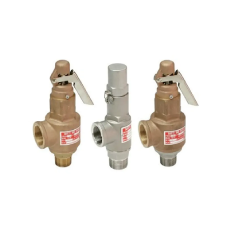
Safety Valves
Safety Valves
According to “ASME boiler and pressure vessel specifications”, a safety valve is an automatic pressure control device driven by the static pressure of the medium, used for gas or steam application.
Safety valves play a crucial role in maintaining the integrity and safety of various industrial applications. These pressure relief devices protect pressure vessels and systems by automatically releasing excessive pressure when it reaches a predetermined level, opening at a specific set point (proportional to the pressure increase) and allowing the escape of fluid or gas until the system returns to normal conditions.
In any system, whether a boiler, pipeline, or storage tank, there is always a risk of pressure exceeding the allowable working pressure. This can occur due to factors such as thermal expansion or an unexpected surge in the flow of fluid. Without proper safety measures, this excess pressure can lead to catastrophic failures and potential harm to personnel.
Operators apply safety valves across various sectors, including oil refineries, chemical plants, power generation facilities, and manufacturing units, to protect their equipment from potentially dangerous situations. Safety valves offer reliable performance, providing operators with peace of mind.
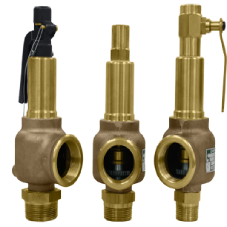
Safety valve for compressed air/gas
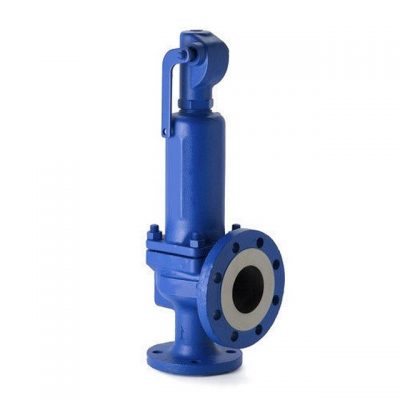
Safety relief valve
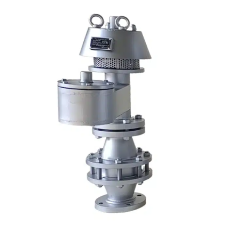
Pressure Vacuum Valves
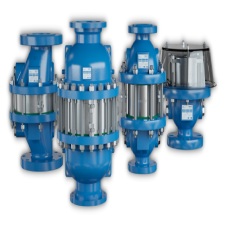
Flame arrestors
FAQ's
The key difference between safety valves and pressure safety valves lies in their functionality.
A safety valve is a mechanical device designed to release excess pressure from a system to prevent catastrophic failures or explosions. It acts as a fail-safe mechanism by opening when exceeding a predetermined set pressure point, allowing the excess pressure to escape and returning the system to safe operating conditions.
On the other hand, a pressure safety valve (PSV) is a type of safety valve designed to protect against overpressure situations. It operates based on the principle of spring force. It uses an adjustable set point to determine when it should open and relieve pressure. Industries such as oil and gas, chemical processing, power generation, and manufacturing commonly use PSVs.
A safety valve serves beyond just relieving excess pressure. It is a safety device, acting as an emergency shut-off mechanism or protecting against other potential hazards.